

Life Sketch of Renowned Freedom Fighter Shri Rebati Ranjan Bhowmik

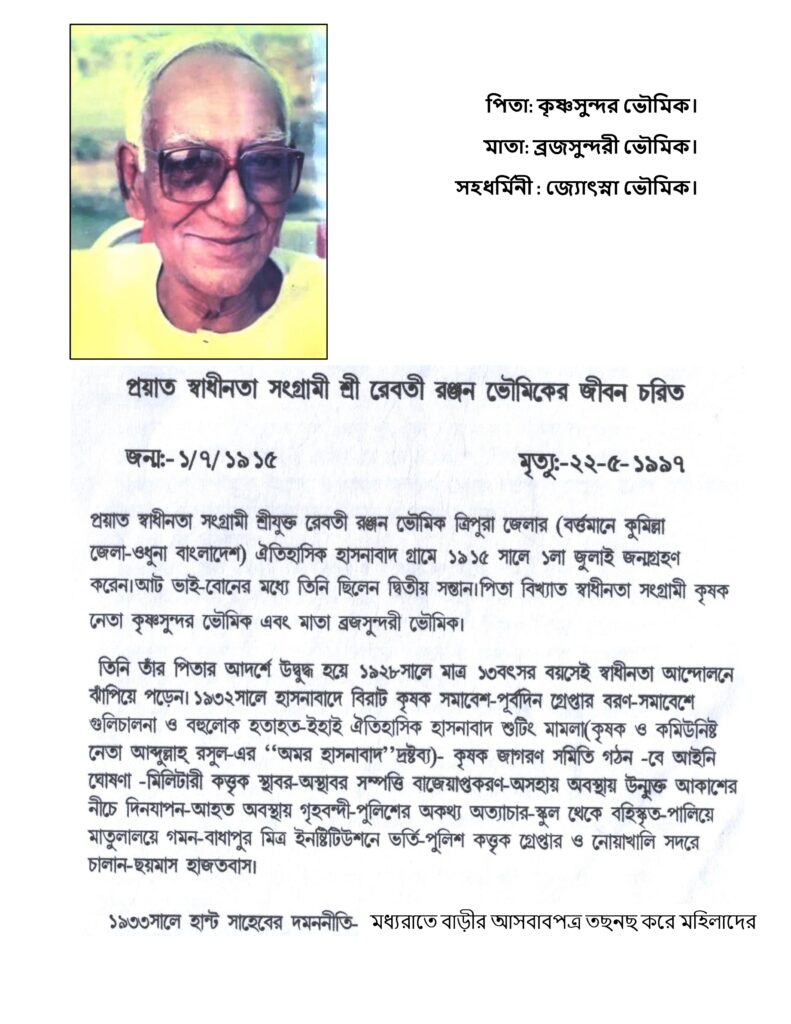
Renowned freedom fighter Shri Rebati Ranjan Bhowmik was born in Hossanabad village, Laksham Police Station, Tripura district (now in Comilla district, Bangladesh). From his childhood, he grew up in a patriotic family environment. Among his inspirations were his father, noted freedom fighter Krishnasundar Bhowmik, and his mother, Rajesundari Bhowmik.
Following his father’s ideals, he was drawn to the freedom struggle at a very young age. In 1930, when he was just 15 years old, he became actively involved in the movement. In 1930, during the famous Hossanabad Peasant-Police Conflict, which arose over the issue of peasant rights and tax resistance, he played a leading role. This historic clash (known as the “Hossanabad Movement”) left a deep impression on him, and from then on he became a key participant in peasant movements.
Throughout the period of colonial repression, he remained deeply associated with mass organizations, helping to mobilize peasants and working to uphold their rights. He took part in anti-colonial campaigns and underground activities during British rule. After being arrested, he endured imprisonment in multiple jails, where he faced inhumane police torture. He also had to live in exile in remote villages like Madhupur, where he continued to lead movements against police oppression.
He was closely connected with peasant leaders across Bengal and played a vital role in organizing resistance against oppressive taxation and exploitative policies.
Date of Birth: 1st July 1915
Date of Death: 22nd May 1997
Father: Krishnasundar Bhowmik
Mother: Rajesundari Bhowmik
Spouse: Jyotsna Bhowmik
Historical Note:
In 1930, during one midnight raid in his ancestral home, women were brutally assaulted by the police and paramilitary forces in an attempt to suppress the peasant movement.
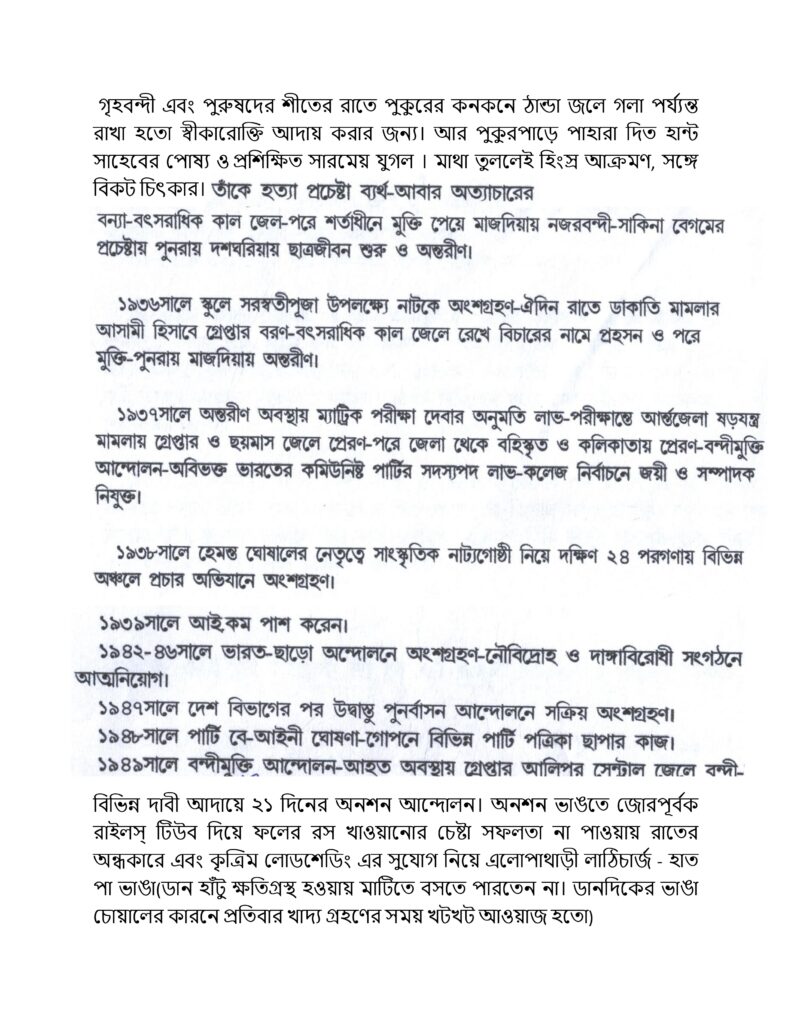
Prisoners, during the freezing winter nights, were forced to sit in cold water up to their necks as punishment in order to break their morale. In addition, they were made to walk on gravel, subjected to physical and mental torture. Many lost their hair, teeth, and even their eyesight due to the brutal treatment. Attempted murders, inhuman atrocities, and brutal assaults became routine in jail.
After release from prison, he continued his involvement in movements like the Majdia–Navadwip–Shibpur flood control peasant movement, working actively for land reforms and the rights of peasants.
In 1936, on the occasion of the Government’s Centenary Celebration, he led student protests by organizing cultural plays and demonstrations. Arrested that night, he was kept in jail without trial for six months.
In 1938, he led the cultural organization “Sanskriti Natya Gosthi,” which staged plays in South 24 Parganas and raised awareness about social injustice and peasant struggles.
In 1941, he was imprisoned once again.
In 1942–1946, he took part in the Quit India Movement and remained active in underground revolutionary and organizational activities.
In 1947, after independence, he played a significant role in rebuilding peasant organizations.
In 1948, during the “Food Movement,” he organized rallies and protests under various parties and platforms.
In 1959, he played a key role in the Food Movement and was arrested for his involvement in organizing peasant resistance in Nadia district.
During this time, he went on a 21-day hunger strike in prison, demanding various rights. He was force-fed using iron tubes. When this failed, liquid food was poured down his throat at night by inserting a rubber tube through his nose (nasogastric feeding). His feet swelled and became permanently damaged due to torture. Because of repeated force-feeding, his stomach was severely affected, and he suffered from digestive problems throughout his life.
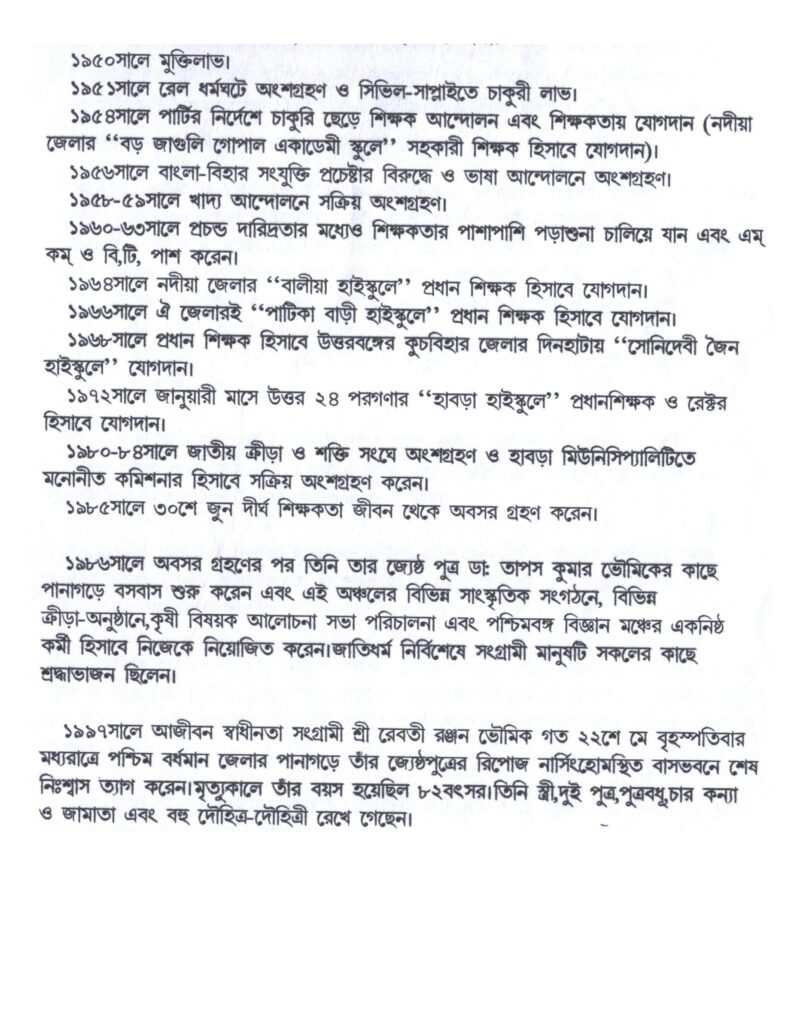
In 1950, he participated in the Tebhaga Movement.
In 1952, he lost his job as a teacher at Sealdah-Sahapur School due to his involvement in the Railway Workers’ Movement.
In 1954, he again got employment as an assistant teacher at the “S.P. Institution, Gopal Eknath High School” in Nadia district through the directive of the ruling party, while continuing his association with the peasant movement.
In 1956, he took part in the movement against the Bengali Language Bill and the agitation for recognition of the Bengali language.
In 1958–59, he was actively involved in the Food Movement.
In 1960–70, he continued to spread education among poor students and taught them free of cost, while completing his M.A., B.Ed.
In 1963–64, he was appointed Headmaster of Ranaghat High School in Nadia district.
In 1968, he became the Headmaster of Pakuria Bari High School.
In 1970, he took over as the Headmaster of Sailesh Chandra High School in Shibpur, Krishnanagar, Nadia district.
In 1972 (January), he joined as Headmaster and Rector of Habra High School, 24 Parganas (North).
In 1976–77, he contributed significantly to the development of education, sports, and physical training, and also worked as a municipal commissioner of Habra Municipality.
On 30th June 1985, he retired from his long teaching career.
After retirement in 1985, he settled in the home of his youngest son, Dr. Tapas Kumar Bhowmik, and became engaged in various cultural organizations, sports activities, agricultural discussions, and awareness programs. He also served as an examiner in agricultural sciences for the West Bengal Council of Higher Secondary Education. He was deeply respected for his knowledge and commitment, and remained a devoted social worker until the end.
In 1997, freedom fighter Shri Rebati Ranjan Bhowmik passed away on 22nd May, at the residence of his youngest son in Panihati, North 24 Parganas. At the time of his death, he was 82 years old. He is survived by his wife, two sons, two daughters, grandchildren, and a large circle of relatives and admirers.
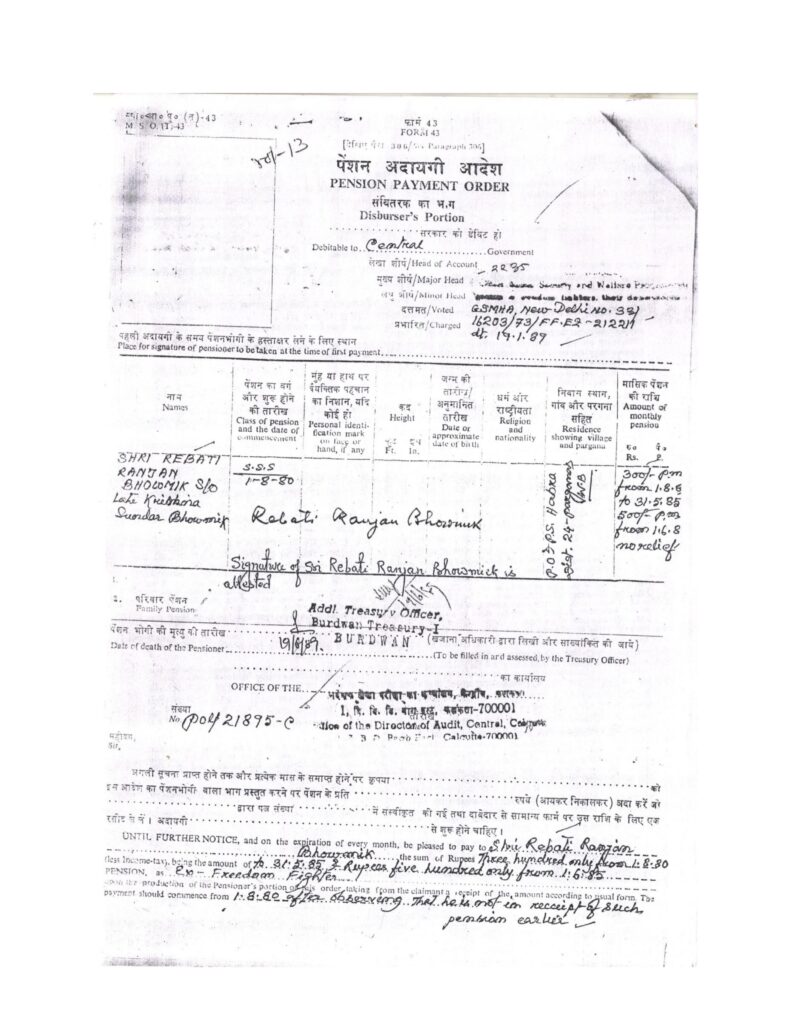
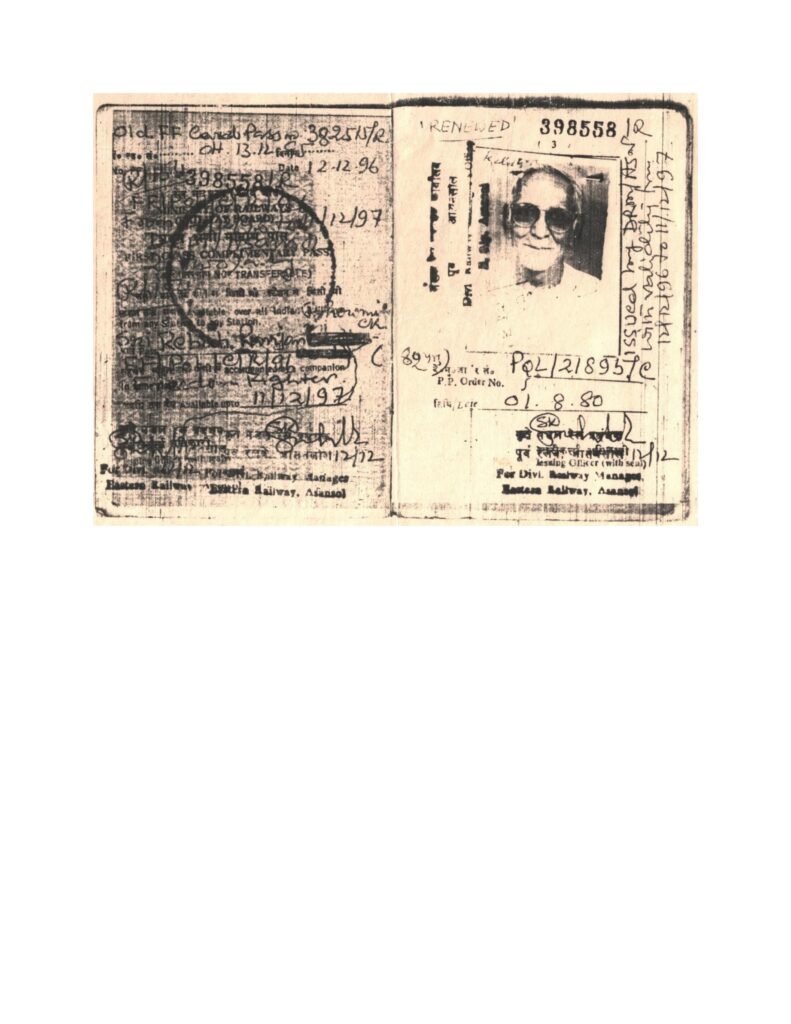
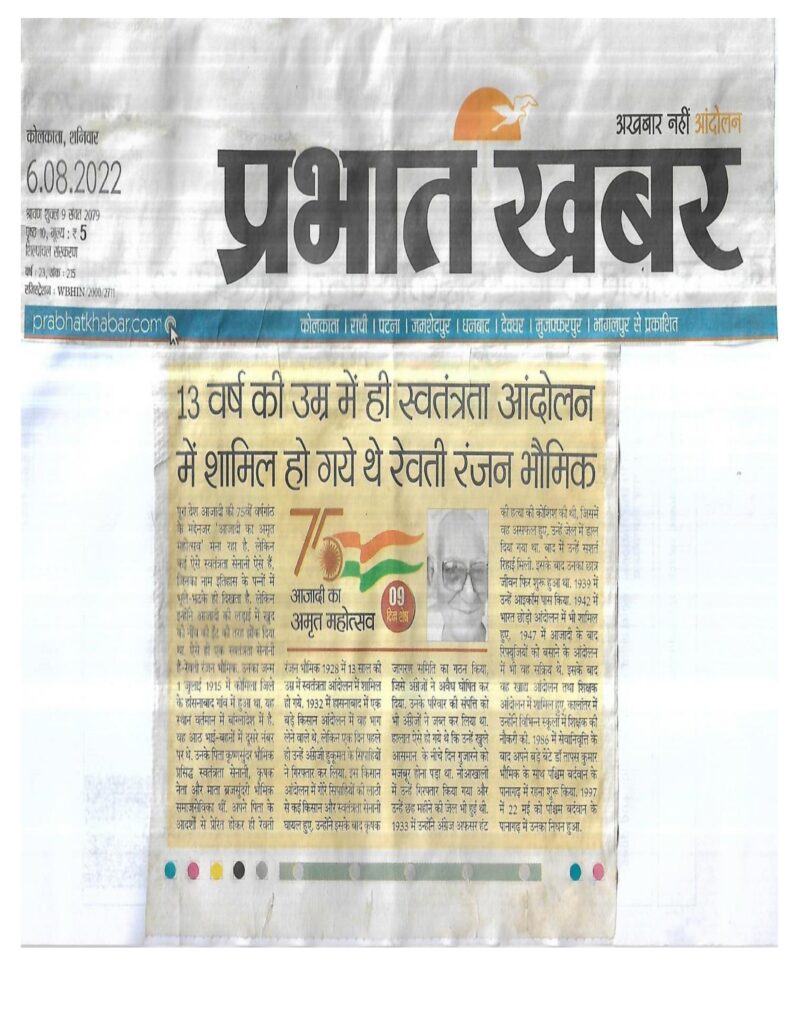
(Testimonies and Documents:)


Comments (2)
99win99
says December 07, 2025 at 6:51 pmAlright 99win99, let’s see what you got. Heard you’ve got good slots selection? Hope the payouts are legit! I’m signing up for a spin! 99win99
777afun
says January 23, 2026 at 2:08 pm777afun, pure and simple fun! That’s the feeling I got. They keep it fresh with new games and some decent promos. Thumbs up for a good time. Give 777afun a try!